Wind Damage Roof Inspection in Linwood Park, Fort Lee, NJ
Wind Damage Roof Inspection for Linwood Park homes and businesses — our inspectors, photo reports, 24/7 emergency availability.
Linwood Park brings its own roofing challenges: aging built-up and modified-bitumen membranes on the original co-op buildings, the 1950s garden-apartment and co-op complexes along Linwood Avenue, and tree-lined streets with mature oaks shading low-rise roofs. Our wind damage roof inspection is calibrated for exactly these conditions — documentation includes wind-speed context from the event, which strengthens insurance claims tied to named storms.
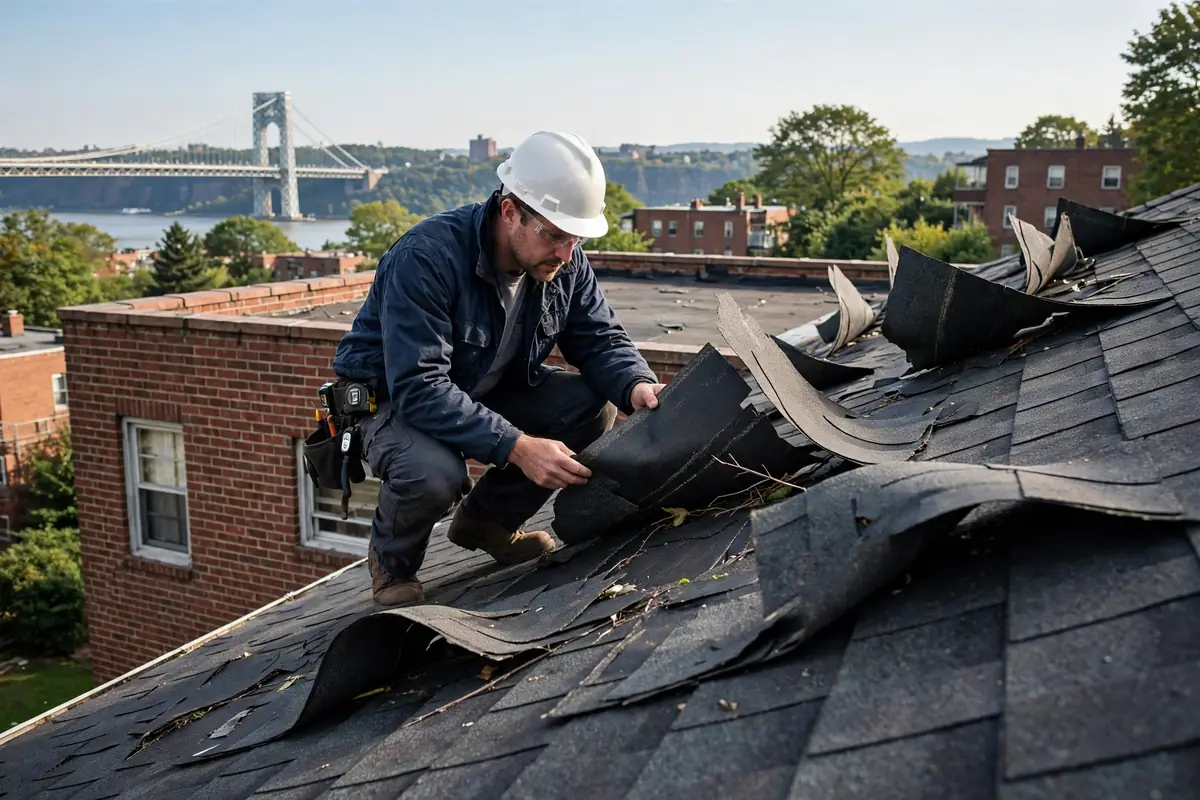
When you book wind damage roof inspection in Linwood Park with Roof Inspection Team, you get more than a quick look at the shingles. Wind damage is progressive: a lifted shingle that reseals today becomes a torn-off tab in the next storm. We find creasing and sealant failure before the next event finishes the job. Every visit ends with a written, photo-documented report — and our call representatives are available 24/7 for emergencies.
Why Wind Damage Roof Inspection Matters in Linwood Park, NJ 07024
The 1950s garden-apartment and co-op complexes along Linwood Avenue shapes every roof here, and tree-lined streets with mature oaks shading low-rise roofs adds its own stress. Ridge caps, rakes, and eaves take the worst of it — we check those edges first, then work inward across every slope.
That is why a generic inspection falls short in Linwood Park. Our wind damage roof inspection accounts for the local housing stock, the exposure, and nor'easters, Hudson River wind gusts, and freeze-thaw ice cycles — so the findings actually match your roof.
How It Works
Call after high winds
Reach (888) 974-0663 — our call representatives are available 24/7 for emergencies.
Edge-first survey
We start at ridges, rakes, and eaves where uplift damage concentrates, then cover every slope.
Sealant and fastener check
Lifted tabs are tested for reseal; failed sealant and exposed fasteners are documented.
Claim-ready report
Findings are dated to the wind event with photos organized per slope.
What We Watch For in Linwood Park
Aging built-up and modified-bitumen membranes on the original co-op buildings is the first thing we note on arrival. Combined with nor'easters, Hudson River wind gusts, and freeze-thaw ice cycles, it tells us where this roof is most likely to fail — and that is where we look hardest. During your wind damage roof inspection, our inspectors check the full system and document everything with photos.
Wind Damage Roof Inspection Near You in Fort Lee
- Wind Damage Roof Inspection across Fort Lee — the full service page.
- All roof inspections in Linwood Park — every service we offer here.
- Wind Damage Roof Inspection in Palisade Avenue
- Wind Damage Roof Inspection in The Bluff
Related Services
- Post-Repair Roof Inspection in Fort Lee — Verify the repair actually fixed the problem.
- Pre-Purchase Roof Inspection in Fort Lee — Know the true condition of the roof before you buy.
- Roof Certification Inspection in Fort Lee — A written statement of your roof's condition and remaining life.
- Storm Damage Roof Inspection in Fort Lee — Document wind, hail, and debris damage before it gets worse.
Related Guides
- After the Storm: 6 Steps Before You Call the Roofer
- 7 Signs Your Roof Has Storm Damage (Even If It Looks Fine)
What Wind Damage Roof Inspection Covers in Linwood Park, NJ 07024
After any high-wind event — nor’easter, thunderstorm microburst, or tropical remnant — check for the wind signature: lifted shingle tabs (especially on windward slopes), creased tabs that will snap off in the next storm, missing ridge and hip caps, and wind-driven debris damage. Fort Lee’s Palisades bluffs and high-rise corridors create brutal localized gusts; The Bluff and Fort Lee Heights take the worst of it. Quickly — before the next rain exploits the lifted tabs.
Our Wind Damage Roof Inspection Process
We work slope by slope from the windward side: seal-strip adhesion tests (gentle lift checks), crease and bruise documentation, ridge and hip cap inventory, flashing and edge-metal uplift checks, and collateral damage to vents, gutters, and siding that corroborates wind speed. The drone photographs upper slopes at uniform resolution. The report separates wind-created damage from age and wear — the distinction adjusters require — with counts and locations for every finding.
Linwood Park Roofs: What We Plan Around
Linwood Park is a tranquil cooperative apartment community on 35 acres in the north side of Fort Lee, with 265 three-story brick buildings and 1,170 units of studios, one- and two-bedroom apartments built in the 1950s. Near the Fort Lee Historic Park and the Hudson River bluffs, its landscaped grounds and mature trees create a park-like setting.
Aging built-up and modified-bitumen membranes on the original co-op buildings, many now 30–70 years into service with overlays of varying quality. Low-slope brick-building roofs with original gravel surfacing in places; north-facing valleys prone to moss from the deep shade of mature trees. Drainage retrofits and patch histories vary building to building.
How Wind Damage Roof Inspection Differs in Linwood Park, Fort Lee NJ 07024
Linwood Park’s weather writes the inspection plan. North-facing valleys prone to moss from the deep shade, and mature-tree debris dams the low-slope drains each fall. Winter snow loads sit on the flat-ish roofs and melt. For wind damage roof inspection, that means we prioritize the damage modes Hudson Valley storms actually create here — wind uplift on the Linwood Park exposures, ice-dam moisture paths, and the drainage problems the neighborhood’s tree cover creates. Every photo in your report is captioned with why it matters for a Linwood Park roof specifically.
Wind Damage Roof Inspection in Linwood Park starts with the neighborhood, not the checklist. Aging built-up and modified-bitumen membranes on the original co-op buildings, many now 30–70 years into service with overlays of varying quality. Low-slope brick-building roofs with original gravel surfacing. So before we fly or climb, we already know which slopes, valleys, and flashing lines deserve the closest look — and the photo report maps every finding to those exact spots. North-facing valleys prone to moss from the deep shade, and mature-tree debris dams the low-slope drains each fall. Winter snow loads sit on the flat-ish roofs and melt. That local pattern is why a generic inspection misses things here that we catch on the first pass.
Timing matters for wind damage roof inspection in Linwood Park. North-facing valleys prone to moss from the deep shade, and mature-tree debris dams the low-slope drains each fall. Winter snow loads sit on the flat-ish roofs and melt. We schedule around the Northeast storm calendar — fall baselines before the November-to-March nor’easter stretch, damage documentation within days after major wind events — so your Linwood Park roof’s record is current when it counts. Aging built-up and modified-bitumen membranes on the original co-op buildings, many now 30–70 years into service with overlays of varying quality. Low-slope brick-building roofs with original gravel surfacing. Call (888) 974-0663 and we’ll slot Linwood Park into the next available route, usually within 48 hours.
Wind Damage Roof Inspection in Linwood Park FAQs
Which parts of the roof does wind hit hardest?
Ridges, rakes, and eaves — the edges where uplift forces concentrate. That is where we start every wind inspection.
How fast should I act after a windstorm?
Quickly — before the next rain exploits the lifted tabs. In Linwood Park, where aging built-up and modified-bitumen membranes on the original co-op buildings, we prioritize wind calls within 24 to 48 hours.
Do you work with co-op boards in Linwood Park?
Yes — much of our wind damage roof inspection work in Linwood Park is arranged through co-op boards and managing agents for the 1950s complexes.
Wind Damage Roof Inspection in Linwood Park — Book Your Inspection Today
Call Roof Inspection Team at (888) 974-0663 — Mon-Fri: 8:00 AM - 5:00 PM, Sat: 9:00 AM - 3:00 PM, Sun: Closed. Our call representatives are available 24/7 for emergencies.